Bonn, Germany | 11 June 2026
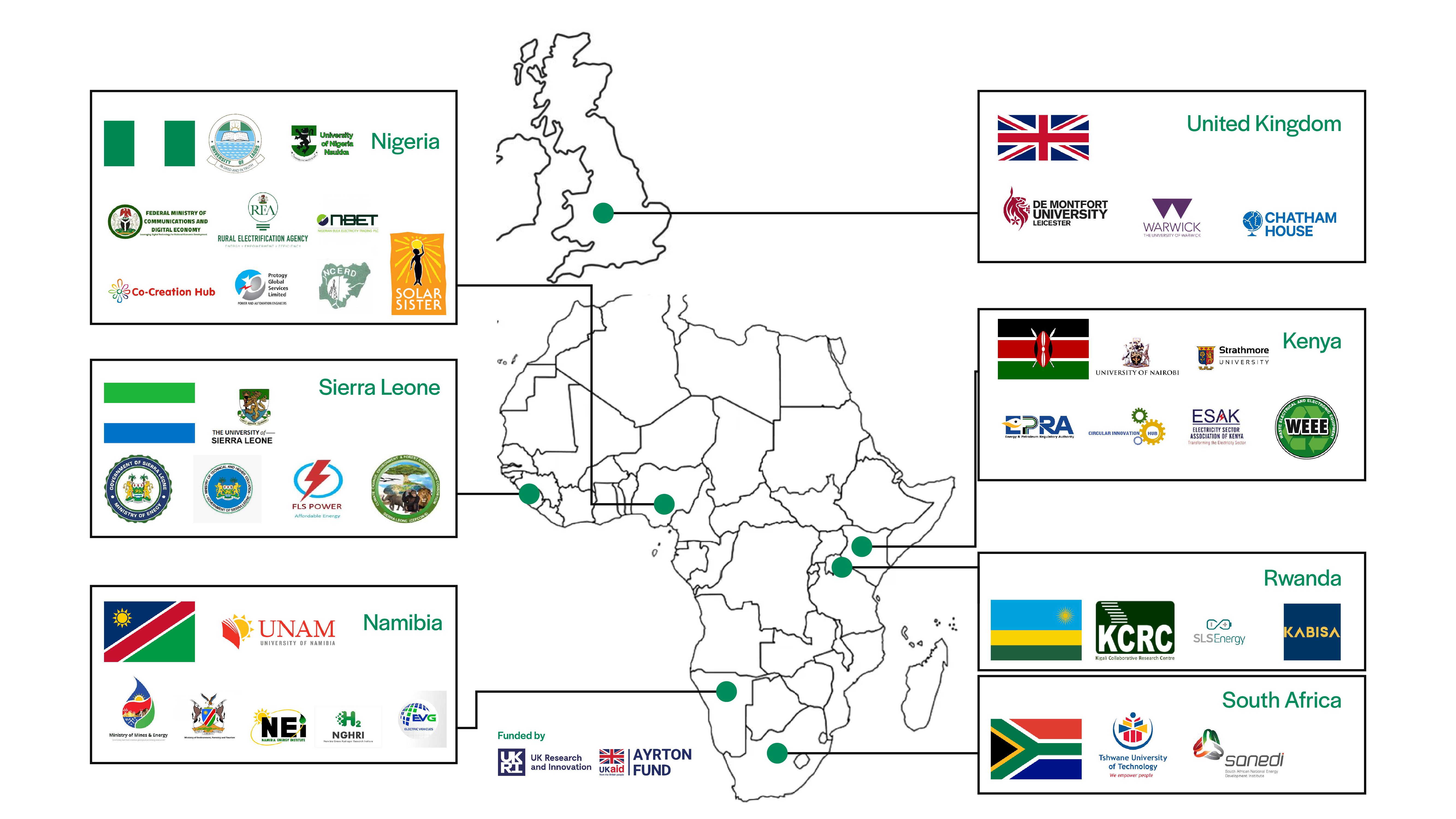
The Circular Economy Powered Renewable Energy Centre (CEPREC), led by De Montfort University, contributed an African implementation perspective at the June Climate Meetings, SB64, in Bonn, highlighting the role of circular renewable energy systems in advancing climate mitigation, clean energy access and resilient development pathways.
CEPREC co-hosted the SB64 side event “Circular Economy for Climate Action: Scaling Mitigation and Industrial Transformation” with UNIDO. Ahead of the side event, CEPREC also held a press conference to outline its work on circular renewable energy systems, circular microgrids, second-life technologies and implementation pathways for Africa’s clean energy transition.
Speaking during the side event, Professor Muyiwa Oyinlola, Director of CEPREC, set out the Centre’s core message: Africa’s clean energy transition must be circular by design. The contribution built on CEPREC’s wider policy and stakeholder engagement, including its earlier public launch and high-level summits, which positioned the Centre as a Pan-African research and innovation platform connecting academia, industry, government and communities around circular renewable energy systems.
“Africa’s clean energy transition must be circular by design,” Professor Oyinlola said. “The goal is not only to deploy clean energy, but to make sure those systems can be maintained, repaired, reused, repurposed and recovered.”
CEPREC’s contribution focused on circular renewable energy systems, circular microgrids, second-life batteries, repurposed power electronics, e-waste governance, local skills, standards, finance and policy engagement. The presentation argued that clean energy systems should not create tomorrow’s waste and dependency problem, and that lifecycle thinking must be embedded from the design and deployment stage.
The Centre highlighted that circular renewable energy systems can contribute to climate mitigation by extending the useful life of clean energy assets, reducing avoidable material and replacement demand, supporting second-life applications and improving the recovery of valuable components. At the same time, CEPREC emphasised that adoption depends on more than technology deployment. For circular clean energy solutions to be taken up by households, SMEs, developers and communities, they must be affordable, reliable, repairable, safe and trusted.
CEPREC also argued that renewable energy systems can be low-carbon in use but still linear in design, procurement, maintenance and end-of-life management. The Centre therefore called for greater attention to repairability, local maintenance capacity, testing infrastructure, standards, safety protocols and circular value chains.
Dr Abi Okoya, Head of Strategic Partnerships at CEPREC, emphasised the implementation conditions needed to move from pilots and projects to scalable circular energy systems. These include policy alignment, finance, standards, skills, data, community trust and coordinated partnerships across academia, industry, government, finance institutions and local actors.
“For renewable energy to be circular, it has to be trusted, adopted and financed,” Dr Okoya said. “Evidence and data are essential for moving from piloting to scale.”
Dr Patrick Schröder of Chatham House and leads CEPREC's policy engagement, brought a policy and value-chain governance perspective, highlighting the importance of integrating circularity into the systems through which renewable energy is planned, procured, financed and regulated. His contribution underlined the need for policy coherence across climate action, renewable energy deployment, e-waste governance, extended producer responsibility, standards and rural electrification.
Professor Giuliana Battisti of Warwick Business School and Deputy Director of CEPREC contributed to the discussion on business models, innovation and finance. Her intervention highlighted that circular renewable energy systems will only scale if technical possibilities are matched by viable business models, investable propositions and institutional conditions that support repair, reuse, repurposing and lifecycle value creation.
Together, the CEPREC contributions showed that circular economy can support climate mitigation and adoption by making clean energy systems more durable, locally maintainable, financially viable and trusted by users. The discussion also highlighted the relevance of circularity for other developing-country contexts facing similar challenges around imported technologies, limited testing infrastructure, affordability constraints, skills gaps and emerging e-waste risks.
CEPREC’s message at SB64 was clear: circular economy is not only an end-of-life issue. It is a system design principle for inclusive energy transitions. By embedding circularity into renewable energy planning, procurement, financing, maintenance and recovery, countries can strengthen climate mitigation while supporting energy access, local enterprise, skills development and long-term resilience.
The discussion forms part of CEPREC’s wider mission to generate evidence, build capacity and support policy pathways for circular renewable energy systems across African contexts. CEPREC will continue working with partners to advance implementation-ready circular energy solutions that are technically robust, socially relevant and environmentally responsible.
Notes to editors
SB64 Side Event: Circular Economy for Climate Action: Scaling Mitigation and Industrial Transformation
Date: 11 June 2026
Location: Kaminzimmer, World Conference Center Bonn, Germany
Conference: June Climate Meetings, SB64, Bonn
CEPREC contributors: Professor Muyiwa Oyinlola, Dr Abi Okoya, Dr Patrick Schröder and Professor Giuliana Battisti
CEPREC focus: Circular renewable energy systems, circular microgrids, second-life batteries, repurposed power electronics, e-waste governance, standards, skills, finance, business models and policy engagement
About CEPREC
The Circular Economy Powered Renewable Energy Centre (CEPREC) is a Pan-African, multisectoral and interdisciplinary research and innovation centre led by De Montfort University. CEPREC advances circular renewable energy systems for Africa’s inclusive and resilient energy transition by connecting research, policy, industry and communities. Its work focuses on circular microgrids, second-life technologies, capacity building, policy engagement and implementation pathways.
Media contact
Dr. Abi Okoya
abi.okoya@dmu.ac.uk
#SB64 #ClimateAction #CircularEconomy #RenewableEnergy #EnergyAccess #Africa #CEPREC #CircularEnergy