Innovation Is Not Enough
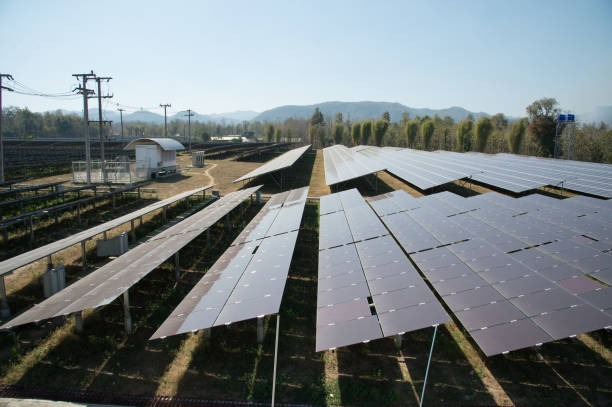
Across sub-Saharan Africa, around 600 million people still lack reliable access to electricity. Despite global progress, the proportion of people without power in many African countries has remained stubbornly high, particularly in rural communities.
Microgrids offer a promising solution. They are decentralised, flexible and well suited to remote or sparsely populated areas where extending the national grid is too costly. Yet even when the technology exists, adoption remains slow.
Why?
Because innovation alone does not guarantee impact.
“The challenge is not only inventing sustainable technologies. It is ensuring they are adopted, sustained and economically viable.”
From Invention to Diffusion
In the economics of innovation, we distinguish three stages:
1. Invention – the idea is conceived.
2. Innovation – the idea becomes a tangible product.
3. Diffusion – the product spreads through society.
It is the third stage that often proves most difficult.
History shows that even transformative technologies take decades to diffuse. Electric vehicles were invented in the nineteenth century. Wind power, microprocessors and even refrigerators all followed slow, uneven adoption curves across countries and communities.
Diffusion is rarely automatic. It is shaped by information, incentives, institutions and human behaviour.
Why Adoption Is Rationally Delayed?
It is rational for individuals and firms to delay adopting new technology. Uncertainty, cost, risk perception and limited information all influence decision-making.
Some theories suggest technologies spread like epidemics. The more people use them, the more others follow through word of mouth and demonstration effects.
Other models highlight firm characteristics. Larger or more capable organisations may adopt sooner because they have resources and technical expertise. Competitive pressures can either accelerate or deter entry into new markets.
Sociological perspectives emphasise norms and trust. Communities may resist change not because it lacks value, but because it disrupts established habits or social structures.
All of these forces matter when considering circular microgrids.
Circular Microgrids: More Than a Technical Upgrade
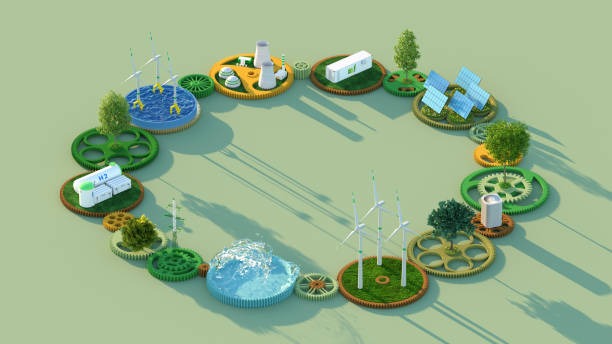
At the Circular Economy Powered Renewable Energy Centre, we are developing circular microgrids that repurpose components from electric vehicles, including batteries, converters and motors.
The objective is to make microgrids:
- More affordable
- More sustainable
- More locally adaptable
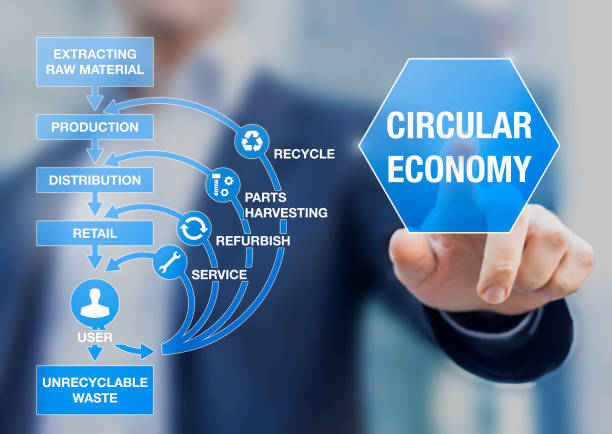
Repurposing extends the life of valuable materials and reduces waste. In many African contexts, lower labour costs can make second-life applications economically viable.
But technical feasibility is only part of the equation.
We must also ask:
- Who produces these systems?
- Who maintains them?
- Who captures the value?
- What business model ensures long-term sustainability?
Users and Producers: Two Sides of the Same Equation
Much discussion around energy access focuses on households. What is their willingness to pay? How do they perceive reliability? What are their energy needs?
These questions are essential. Yet diffusion also depends on the producer side. Entrepreneurs must see viable returns. Financial institutions must be confident in risk assessments. Supply chains must function effectively. Standards must ensure safety and quality.
If prices fall too rapidly, producers may be discouraged from entering the market. If margins are too thin, long-term maintenance may suffer. Sustainable diffusion requires balance. The product must be affordable for users and profitable enough to sustain suppliers.
“Environmental sustainability is not enough. Circular energy systems must also be economically and financially sustainable.”
Make or Buy? The Industrial Strategy Question
A deeper strategic question is emerging: Should African countries simply import circular components, or should they build local production capacity?
Africa is rich in many of the raw materials required for battery and photovoltaic technologies. Yet much of the value addition currently occurs elsewhere. Components are manufactured overseas and later re-enter African markets as finished products or second-life imports.
Circular microgrids create an opportunity to rethink this trajectory.
- Could local assembly stimulate entrepreneurship?
- Could foreign direct investment support domestic manufacturing?
- Could standards and finance mechanisms unlock industrial growth?
Energy transition can be more than a consumption shift. It can become a catalyst for industrial development.
Data, Context and the Ecosystem Approach
One challenge in understanding adoption in the Global South has been limited data. To address this, we are conducting large-scale surveys across six African countries to gain a deeper understanding of both the demand, whether by firms or households, and the supply side of the technology. We do so via an ecosystem analysis of:
- Household needs, attitudes and willingness to pay
- Institutional and political contexts
- Business readiness including supply chain, state of technology, skills, finanace and the overall business model
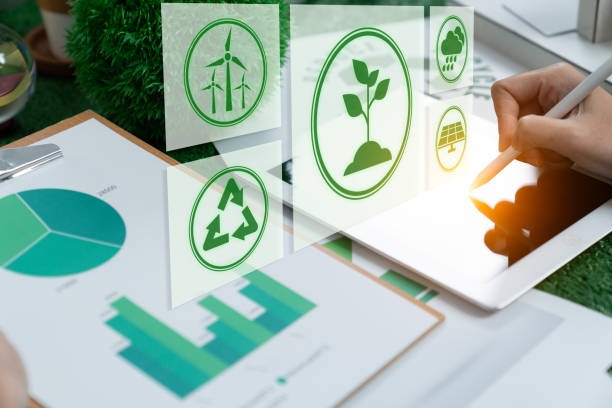
This reflects a broader philosophy: energy transition must involve universities, industry and government working together.
Technology, finance, policy and behaviour are interconnected. Remove one piece and diffusion stalls.
From Impact to Transformation
If circular microgrids are to move from innovation to impact, we must think beyond installation. We must consider:
- Long-term maintenance
- Skills development
- Industrial strategy
- Policy alignment
- Entrepreneurial incentives
Diffusion is not a single event. It is a process shaped by ecosystems.
“Impact happens when innovation becomes embedded in institutions, markets and communities.”
Africa’s clean energy transition is not only about delivering electricity. It is about designing systems that are sustainable, scalable and capable of supporting economic growth. Circular energy solutions offer that possibility. But only if we understand how innovation truly spreads.