A Second Life for the Machines that Moved Us
Across Africa, millions still live without reliable electricity. Yet at the same time, a new wave of electric vehicles (EVs) is changing global mobility. Hidden inside every one of those cars is a powerful machine that could help bridge Africa’s energy gap, the electric motor.
When a vehicle reaches the end of its life, its motor does not. These motors are built for strength, endurance and high performance under harsh conditions. The question is simple can we turn retired EV motors into generators that power our homes, schools and clinics?
"A motor that once powered mobility on the road can now power electricity in a community.”
Why Electric Vehicle Motors Matter

EV motors are compact, robust and efficient. Designed to handle acceleration, vibration and heat, they are ideal candidates for stationary applications such as small hydro and wind-powered microgrids.
In a continent where more than 600 million people still lack access to electricity, repurposing EV motors could be a game-changer. Instead of being treated as e-waste, these machines can be re-engineered into clean energy generators, producing clean power where it is needed most.
By integrating retired motors into standalone microgrids, local industries can reduce their dependence on expensive imports by extending the life of high-value materials like rare-earth magnets and copper windings required for manufacturing power generators.
Understanding the Opportunity
Modern EVs use a variety of motor types, from induction machines to permanent magnet synchronous motors. The latter dominate because of their high efficiency and torque density, but they are also expensive.
When these motors reach the end of their vehicle life, much of their potential remains unused. Through simple reconfiguration and modest adaptation, they can operate as generators driven by small wind or hydro turbines.
Unlike in a car, where the motor must handle rapid acceleration and braking, a microgrid generator works under steady, lower-stress conditions. The modest duty cycle under stationary microgrid application could give a repurposed EV motor a new lease of life, which could extend its usability by several years.
"We are not only recycling for the sake of waste management; we are re-engineering for energy access.”
From Motion to Generation
Repurposing begins with careful inspection and testing. Engineers assess each motor’s electrical, mechanical and thermal health to determine its remaining useful life. Key steps include:
- Diagnostics and failure analysis to identify wear or damage.
- Reconfiguration of windings or drive interfaces to suit low-speed turbines.
- Integration with converters and controllers to stabilise voltage output.
- Validation through experimental and real-world microgrid applications.
By converting mechanical energy from wind or water into electricity, a retired EV motor becomes the heartbeat of a small renewable energy system.
Circular Economy in Motion
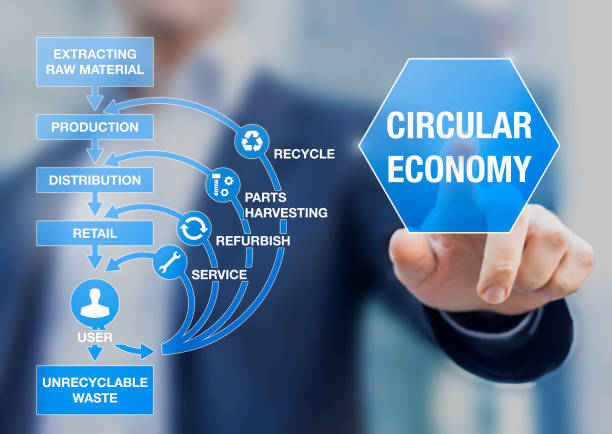
This idea sits at the intersection of two global transitions: electrified mobility and renewable power. It is also a perfect expression of the circular-economy mindset, keeping valuable materials in use, reducing environmental impact and creating new industrial opportunities.
A reuse-first strategy also saves the energy and emissions associated with recycling or remanufacturing. Instead of dismantling motors and smelting their metals, we can repair, reconfigure and redeploy them immediately.
If scaled, this approach could stimulate local green-tech enterprises, build requisite skills in microgrid installation and maintenance while lowering the cost of distributed generation for off-grid communities, directly supporting Africa’s Just Energy Transition (JET) goals.
Designing for the Future
The long-term vision goes beyond repurposing today’s motors. Future EVs can be designed with modularity and circularity in mind, allowing components to be easily extracted, tested and reused. Manufacturers and policymakers can collaborate to rechannel end-of-life EV components towards secondary clean energy projects instead of dumping them at scrapyards.
By aligning industrial design, policy frameworks and community needs, Africa can position itself not as a recipient of discarded technology, but as a leader in circular energy innovation, turning waste into wealth.
Powering Progress, One Motor at a Time
Repurposing retired EV motors is more than an engineering challenge but serves as a model of how innovation, sustainability and inclusive development could converge to meet Africa’s most pressing needs. Every decommissioned motor represents a chance to light a school, power a health clinic or drive a local enterprise.
If we can transform wheels into watts, we can transform challenges into opportunities and move closer to a just and inclusive energy future.
"From the road to the river, from motion to generation, the journey of innovation never truly ends.”